Walk into any busy warehouse or manufacturing plant and you will see a constant flow of activity. Employees move between workstations, forklifts carry pallets across the floor, carts and pallet jacks travel between storage areas, and delivery trucks come and go at the loading docks. In spaces like these, everyone needs to know where it is safe to walk, where vehicles will be moving, and which areas must be kept clear.
Floor markings make that possible. Clear markings separate people from equipment, keep emergency exits and fire extinguishers accessible, and help employees understand the layout of the building.
Floor marking is also connected to workplace safety regulations. Knowing what OSHA requires, and how facilities commonly organize their markings, can help create a safer space and prepare for inspections.
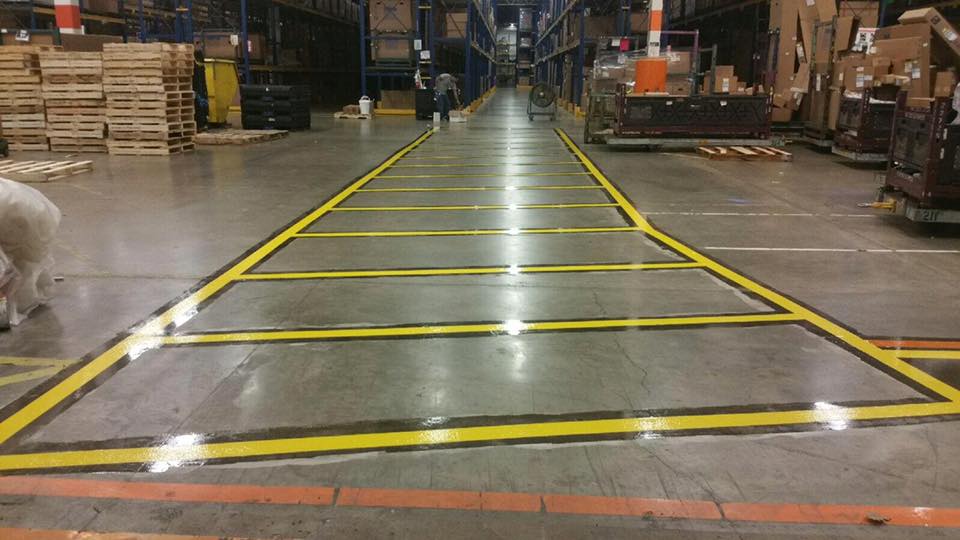
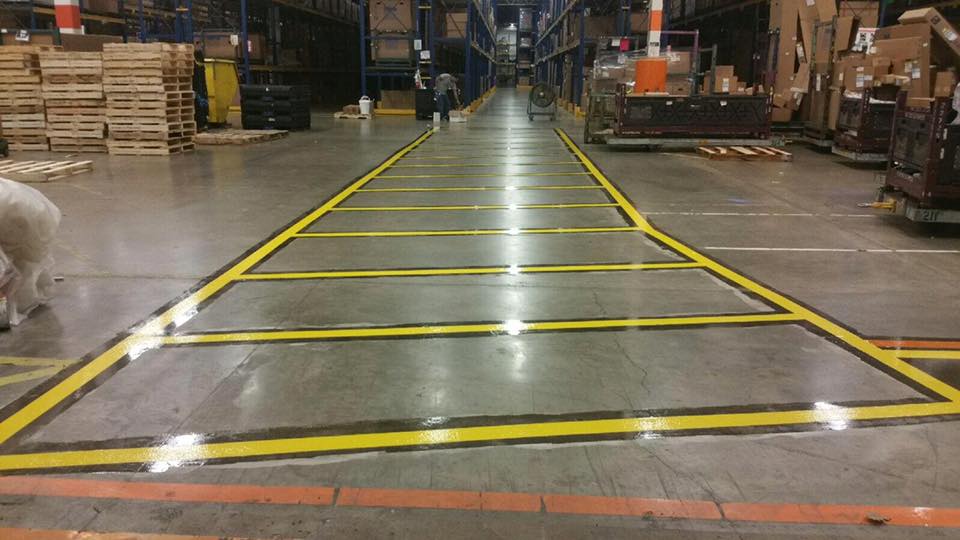
OSHA requires permanent aisles and passageways to be appropriately marked when mechanical handling equipment, such as forklifts, is used. Aisles must also be kept clear and in good repair so people and equipment can move safely.
OSHA's safety color code uses red to identify fire protection equipment and danger, while yellow identifies caution and physical hazards such as tripping, striking, or pinch points. OSHA does not require one exact color layout for every facility. Many companies use widely accepted industry practices, including ANSI guidance, to create a clear and consistent system.
While layouts vary, many facilities use a color system similar to this:
The most important thing is consistency. Once a facility chooses a color system, it should be used the same way throughout the building and explained to employees.
Floor lines need to be easy to see from a distance. Many facilities use lines that are between 2 and 6 inches wide, depending on the size of the space and the type of traffic. Aisle markings should leave enough room for the largest equipment that travels through the area, with safe clearance for people nearby.
Every facility is different, but some areas deserve special attention.
Forklift traffic lanes and pedestrian walkways should be clearly separated. Areas in front of electrical panels, fire extinguishers, emergency exits, and eyewash stations should be marked so they stay clear. Loading docks, storage zones, work cells, and hazard areas also benefit from clear boundaries.
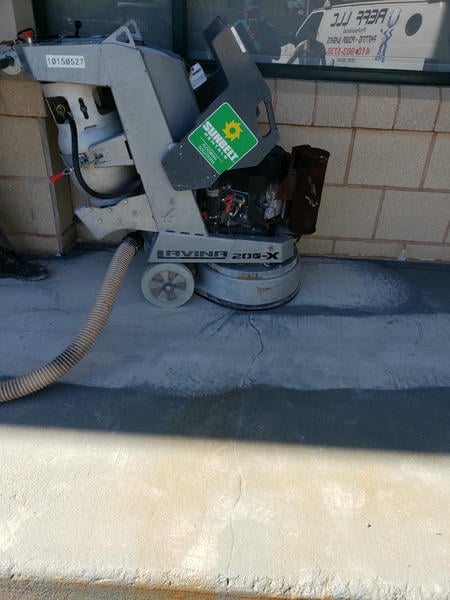
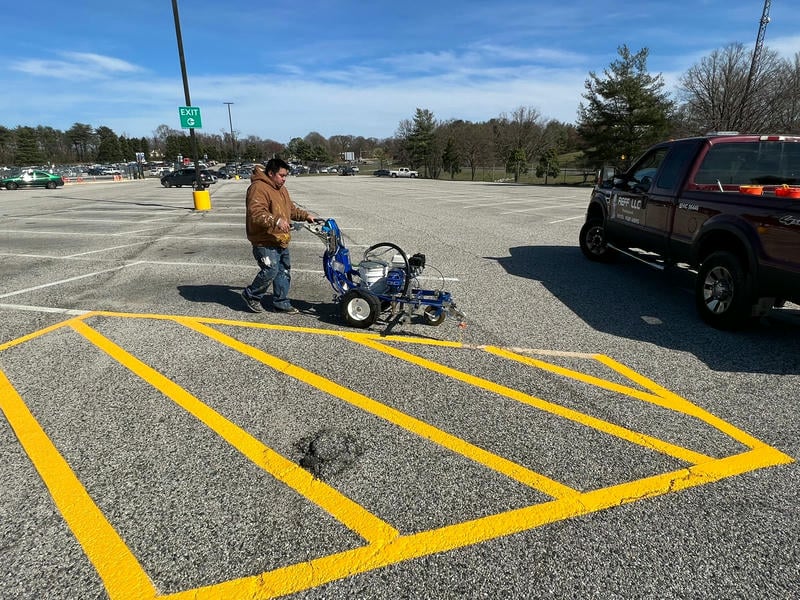
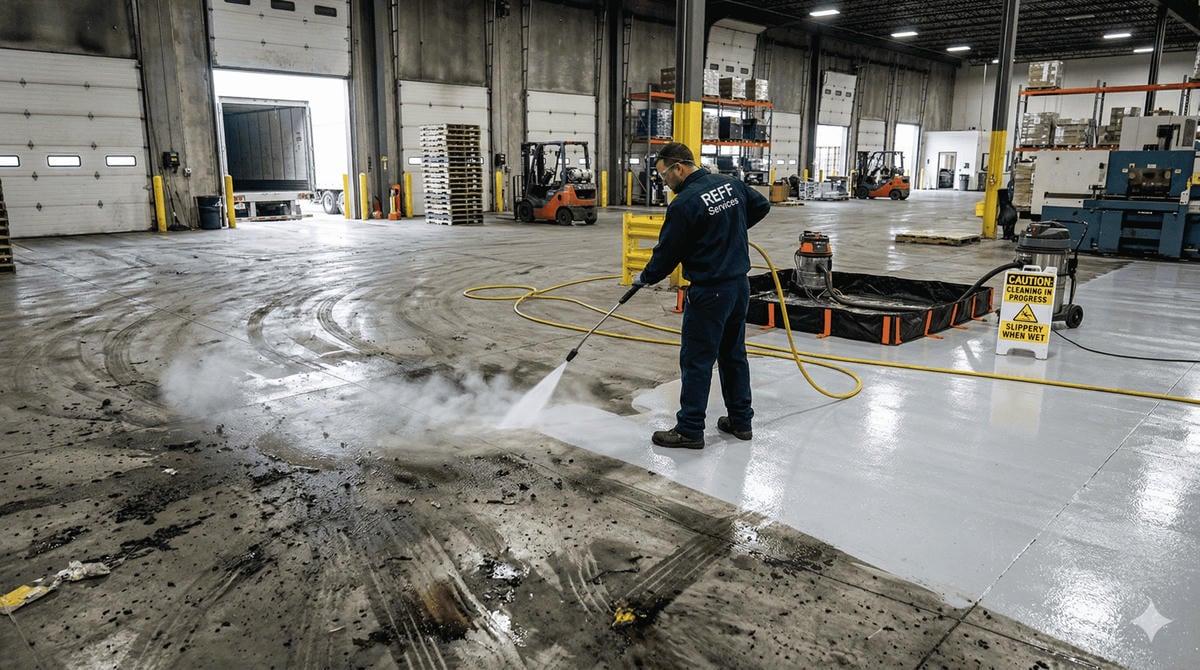
Floor markings take a lot of abuse from forklifts, pallet jacks, and cleaning equipment. Tape may work for temporary layouts, but it can peel and wear quickly in high-traffic areas. Painted lines and coating-based markings usually last longer and are easier to maintain when applied to properly prepared concrete.
For facilities installing epoxy flooring, safety lines and color zones can be added as part of the flooring system. This creates a durable, seamless finish that holds up better to daily wear.
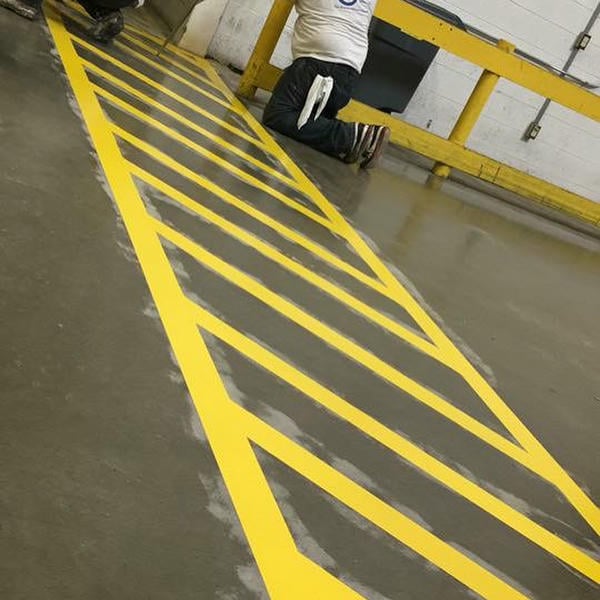
Even well-installed markings fade over time. Worn, dirty, or confusing lines can be almost as risky as having no markings at all. Facility managers should inspect floor markings regularly and schedule touch-ups before lines become hard to see. Markings should also be updated whenever the layout, equipment, or traffic patterns change.
Clear floor markings help protect employees, reduce collisions, keep emergency equipment accessible, and support OSHA compliance. With the right materials and a consistent color system, markings can improve both safety and efficiency.
REFF Services provides floor marking, safety striping, and epoxy flooring for warehouses and industrial facilities throughout Baltimore and surrounding Maryland communities.
Share this post: